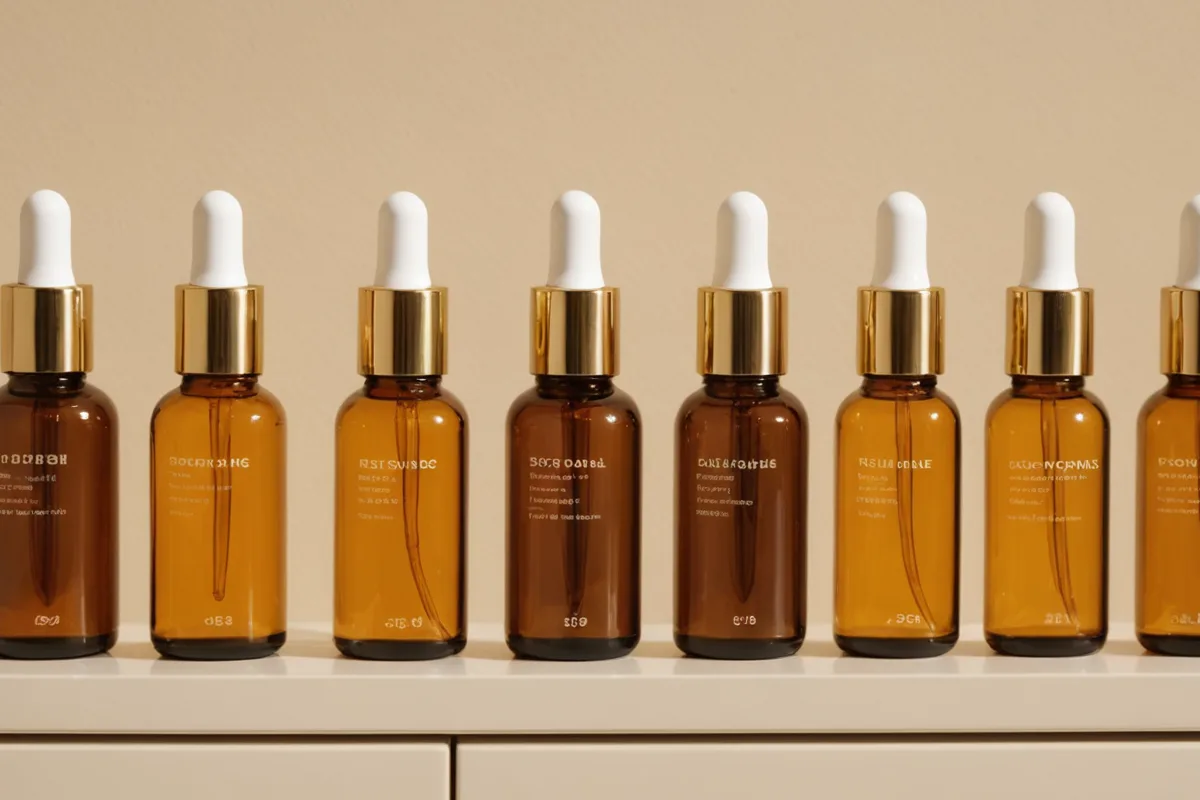
One serum labeled "for all skin types" can be found in almost any pharmacy. The choice makes sense for marketing: one SKU can reach the broadest shelf audience. Yet the wording hides a formulation problem. An active concentration that suits a balanced barrier may irritate sensitized skin and do almost nothing for dehydrated skin.
Recommendation engines make a similar shortcut. Most sort skin into four or five broad groups, then assign each group approved product types. A serum for "normal-to-dry" can therefore reach skin that is reactive, post-procedure, or hormonally disrupted. The label fits; the skin state does not.
Reading skin from a photo rather than a quiz response gives a higher-resolution signal. Texture, tone across facial zones, and visible barrier behavior under certain lighting all provide information that self-reported categories lack. This will not make every recommendation perfect. It does start with a closer read of what is present.
Why Barrier State Changes Everything
The same hyaluronic acid serum can affect two people in the same clinical skin type category in opposite ways. On healthy, intact skin, hyaluronic acid draws moisture from the dermis and holds it at the surface. With a compromised barrier, that molecule can draw water upward and let it evaporate into dry ambient air, worsening the problem it was meant to address. The difference lies not in the ingredient, but in the structure around it.
That is what "for all skin types" leaves out. Barrier condition is a changing state, shaped by climate, product history, hormonal cycles, and recent skin events. A face that appears dry in January in Seoul may differ from the same face in August. A barrier disrupted by overly frequent exfoliating acid is not the same as one chronically dry from genetics. Labels and category buckets capture neither distinction.
In a skin photo, we look for signs of barrier behavior. Surface roughness at certain light angles, fine horizontal lines across the cheeks, and tone evenness beneath the eyes can indicate how well the barrier holds water. Consumer photos in variable lighting are not perfectly reliable. Still, these signs reveal more than saying, "my skin feels tight sometimes."
Dehydration Reading as Oiliness
A frequent mismatch is treating dehydration as oiliness. Dehydrated skin lacks water in the stratum corneum and may compensate by producing more sebum. Photos and most quiz screening then read that sebum as oily skin. The resulting advice is logical: lighter formulas, oil-free products, and perhaps a BHA-containing toner.
For a dehydrated barrier compensating with sebum, the useful approach is nearly opposite: restore water-binding capacity, strip less aggressively with actives, and use a barrier-supportive moisturizer instead of an oil-controlling one. If the engine begins with oily skin, its suggestions may worsen the actual condition over 4 to 6 weeks, even if they seem to address the surface symptom in week one.
This is a resolution issue. A serum for oily-normal skin does not address that scenario. Skin analysis that separates true sebum overproduction from dehydration-related sebum can produce a different recommendation, aimed at the actual state rather than its label.
What Concentration Means in Different Skin Contexts
Even apart from barrier state, active concentrations behave differently across skin conditions. A 5% niacinamide serum on well-hydrated skin with a functional barrier performs within expected parameters. On inflamed, sensitized, or post-procedure skin, the same concentration enters a different biochemical environment. Inflammatory mediators already present affect how cells respond to another active. The effective dose may differ from the formulator's calibration.
This is not an objection to niacinamide or to 5% as a standard formulation choice. It is about context. Concentration recommendations are tested against baseline conditions, not the full range of states a consumer may have at application. Matching a serum to the current state requires knowing that state at the time of recommendation. A photo taken during a stress-related flare can be more useful than a skin type reported two months earlier.
Not a Case Against General-Use Products
The point is not that a serum made for broad compatibility is bad. For many people with a reasonably stable, non-sensitized barrier, it will work well. Targeting a narrow population is economically and practically difficult, so most brands are right not to do it.
The issue is the recommendation, not the product. When a general-use formula is suggested for every skin type, including people for whom it is a poor match, the outcome is predictable. The product receives a poor review, the customer does not return, and the brand learns little. "Did not work" does not explain that the formula suited a different skin state.
Better skin reading at the recommendation stage can send general-use products to people they suit and specialized products to those who need them. The product range need not change. The matching logic does. This is the gap Cutib is trying to close, and it is a difficult one. Photo-based reading from a consumer photo has real limits, and those limits matter. We have made many mistakes and expect to keep learning. Still, starting with the actual skin state is better than starting with a category built for another era of skincare.
As a boundary note, this is not a substitute for a dermatologist's assessment. If irritation persists or barrier disruption is visible, an algorithmic product recommendation is not the right first step. See a clinician. Product matching is most useful when the underlying condition is stable and the goal is support, not treatment of a clinical presentation.